This post may contain affiliate links. As an Amazon Affiliate, I may earn a small commission from qualifying purchases at no extra cost to you. Read the full disclaimer here.
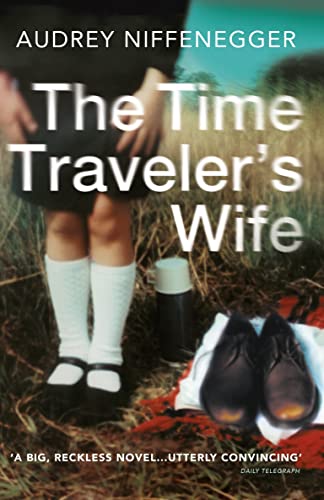
Most time-travel stories are adventures. The Time Traveler’s Wife is an elegy. The time travel is not a superpower or a plot device — it’s a condition, involuntary and random, that takes Henry away from Clare at the worst possible moments and returns him when she’s stopped expecting it. The science fiction element is used in service of an entirely human story about love, loss, and the specific torture of knowing exactly what you’re going to lose before you lose it.
It is one of the best novels of the 2000s. It made me cry on a train, in public, without warning, and I have no regrets.
What’s It About?
Henry DeTamble has Chrono-Displacement Disorder — he involuntarily travels through time, appearing in different moments of his own life and occasionally others’. He cannot control it. He cannot bring anything with him; he arrives naked and has to manage. He has strategies. He is very good at picking locks.
Clare Abshire met Henry when she was six — he appeared in the meadow behind her house, a man in his thirties who was her future husband. She grew up knowing him, loving him, waiting for the version of him who hadn’t met her yet. Henry meets Clare for the first time as a young woman who already knows him completely.
The novel is their love story, told in alternating first-person voices, moving backwards and forwards through time with the logic of Henry’s condition rather than any conventional chronology.
What Niffenegger Does That’s Brilliant
The structural choice — telling the story non-linearly, with both characters narrating — means we often know what’s coming before the characters do. We’ve read Clare’s grief before we’ve read the event that caused it. This is formally sophisticated and emotionally devastating in a way that linear narrative couldn’t achieve.
The time-travel mechanics are thought through carefully. Niffenegger has clearly worked out the rules and commits to them — young Henry visiting young Clare, older Henry unable to change things he’s already seen happen. The determinism of the universe she’s built is one of its most affecting qualities. Nobody can prevent what’s coming. They can only be present for it.
Henry and Clare feel like real people — specific, flawed, recognisable. Their arguments are plausible. Their love is described with enough detail and friction that it feels earned. The novel works as realism that happens to have a time-travel premise, not as science fiction that happens to have emotional content.
The Ending
I’m not going to describe it. What I will say is that Niffenegger has built her novel so that the ending is both completely inevitable and completely devastating, and that the book earns both those qualities. If you’re not someone who cries at fiction, be warned anyway. If you are — make sure you’re somewhere appropriate.
Who Should Read It?
Anyone who wants a love story that takes love seriously, rendered in a structure that earns every page. Readers who normally avoid science fiction will find this entirely accessible — the sci-fi element is present but it’s in service of the human story, not the other way round. Readers who do read science fiction will find it an interesting example of speculative fiction used in a completely different register from the genre’s usual concerns.
Rating: 5/5
Rated 4.3 Stars on Amazon. Buy The Time Traveler’s Wife here.
You Might Also Like
- Daughter of Smoke and Bone Review
- The Long Way to a Small, Angry Planet Review
- Becky Chambers Books in Order
- 31 Best Fantasy Books You Need To Read Today
Check out Sunset In the East — a mind-bending short story collection from Ben Luxon.