This post may contain affiliate links. As an Amazon Affiliate, I may earn a small commission from qualifying purchases at no extra cost to you. Read the full disclaimer here.
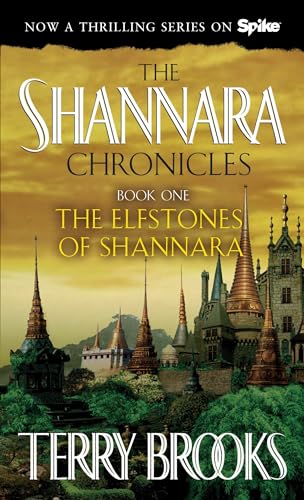
Here’s a debate that runs through the Shannara fandom with the energy of a theological dispute: do you start with The Sword of Shannara (the first book, heavily influenced by Tolkien, and by general consensus the weakest of the early novels), or do you skip straight to The Elfstones of Shannara (the second book, universally agreed to be where Brooks found his own voice)?
I’m in the skip-to-Elfstones camp, and I’ll explain why.
Some Context
Terry Brooks published The Sword of Shannara in 1977 — one of the earliest epic fantasy novels not written by Tolkien or his contemporaries. It was enormously successful and almost as enormously derivative; Tolkien’s influence is present on every page, and not always comfortably so.
The Elfstones of Shannara, published in 1982, is a different book. It uses the same world and some overlapping characters, but it reads as if Brooks had five years to figure out what he wanted to say rather than what he wanted to echo. The result is the novel that’s kept his series in print across five decades.
What’s It About?
An ancient magical barrier called the Ellcrys — a silver tree that seals away the Forbidding, a prison dimension where demons have been confined since the dawn of the world — is dying. If it dies, the Forbidding fails, and the demons come through.
The only way to restore the Ellcrys is to find its seed and carry it to a place called the Bloodfire. The task falls to a young Elf woman named Amberle — granddaughter of the Elven king — and Wil Ohmsford, a young man with uncertain control of the Elfstones, the powerful magical artefacts of the title.
They travel through a world that has been crumbling since The Sword of Shannara’s events, with a demon called the Dagda Mor sending his forces ahead of them, and a shape-shifting Changeling assassin hunting them directly.
What Works
The premise is effectively done. Brooks creates genuine urgency — the Ellcrys is failing, time is short, the consequences of failure are existential — and he sustains it across the novel without the momentum flagging. For a book published in 1982 about a mission to save the world from demons, it holds up remarkably well.
Amberle is the standout character. She’s complicated in ways that female protagonists in fantasy rarely were in 1982 — conflicted about her duty, genuinely frightened, carrying a secret that shapes the novel’s ending in devastating fashion. The novel belongs to her.
The Reaper — the demon sent specifically to kill Wil and Amberle — is one of the great fantasy monsters of its era. Relentless, terrifying, and used sparingly enough to remain frightening throughout.
The ending is genuinely moving. I won’t spoil it, but it’s the reason The Elfstones of Shannara has endured when many of its contemporaries haven’t.
What Doesn’t Quite Work
The prose is functional fantasy writing of its era — adequate, occasionally clunky, never beautiful. If you’re coming to this from Rothfuss or Hobb, the quality drop on a sentence level is noticeable.
Wil is a less interesting protagonist than Amberle and spends much of the novel slightly overshadowed by her. He’s fine. She’s great.
Do You Need to Read The Sword of Shannara First?
No. The Elfstones of Shannara is a sequel in the loosest sense — it shares a world and the Ohmsford family name — but it stands completely alone. I’d start here, and if you love it, the Terry Brooks reading guide covers where to go next.
Rating: 4/5
Rated 4.6 Stars on Amazon. Buy The Elfstones of Shannara here.
You Might Also Like
- Terry Brooks Books in Order
- The Best Fantasy Book Series of All Time
- Epic Fantasy: The Best of the Genre
- 31 Best Fantasy Books You Need To Read Today
Check out Sunset In the East — a mind-bending short story collection from Ben Luxon.