This post may contain affiliate links. As an Amazon Affiliate, I may earn a small commission from qualifying purchases at no extra cost to you. Read the full disclaimer here.
The honest answer to the question “should I read Harry Potter and the Cursed Child?” depends entirely on what you’re hoping to get from it, and the answer is going to be no for most people.
That’s not quite a dismissal. Let me explain what it is.
What It Actually Is
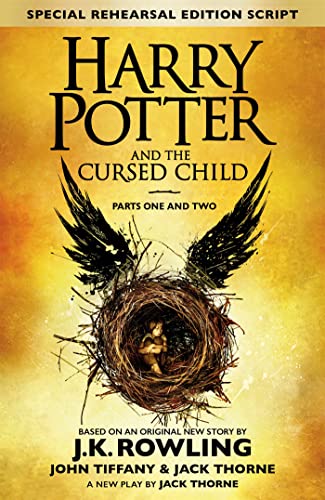
The Cursed Child is a stage play script — two parts, originally performed in London and on Broadway as a two-night theatrical experience — published in book form. It is not a novel. It was not written primarily to be read; it was written to be performed, and the experience of reading the stage directions describing theatrical magic is a fundamentally different and lesser experience than watching the production deliver that magic in person.
This matters because many readers came to the script expecting the eighth Harry Potter novel and found something that reads like fan fiction and was never intended to be a novel in the first place. Judged as what it actually is — a stage play, produced by talented people, with a purpose beyond print — it’s more forgivable.
What It’s About
Set nineteen years after Deathly Hallows, the play follows Albus Severus Potter — Harry’s middle son, named after two headmasters and very much feeling the weight of that name — as he starts at Hogwarts. Albus is sorted into Slytherin. He becomes best friends with Scorpius Malfoy, Draco’s son and probably the play’s best character. Together they attempt something complicated and time-travel-adjacent to correct a historical injustice, and things go wrong in escalating ways.
What Works
Scorpius Malfoy is a genuine triumph. Bookish, funny, anxious, and deeply decent in a way that makes his father’s redemption arc feel earned by proxy — Scorpius is the character the play builds itself around even when it’s nominally focused on Albus. His friendship with Albus has real warmth and the play’s best moments belong to them.
The central theme — the weight of legacy, of being someone famous’ child, of living in a shadow you never asked for — is genuinely interesting and lands with more force than the plot mechanics that deliver it.
What Doesn’t Work
The time-travel plot is messy. The rules shift to suit the story rather than establishing consistent internal logic, which is a particular problem in a Wizarding World that already has established time-travel mechanics from Prisoner of Azkaban.
The villain reveal is widely agreed to be the weakest element of the script and I’ll avoid spoiling it here, but the consensus is correct.
The established characters — Harry, Hermione, Ron, Ginny — feel like approximations of themselves. The dialogue doesn’t quite sound like the people we spent seven books with. This is partly a format issue (novels and plays work differently) but it’s jarring regardless.
Should You Read It?
If you’re a devoted Potterhead who wants to spend more time in this world — yes, it’s short and there are things in it worth your time, particularly Scorpius.
If you’re hoping for the eighth novel — manage your expectations firmly before starting, or skip it and reread Prisoner of Azkaban instead.
If you ever get the chance to see the stage production — do that rather than reading the script. It was designed for a theatre and the script is a pale substitute.
Rating: 3/5
Rated 3.7 Stars on Amazon. Buy Harry Potter and the Cursed Child here.
You Might Also Like
- Top 10 Books Like Harry Potter For Lovers of Magical Fiction
- Heartless by Marissa Meyer Review
- The Best Fantasy Book Series of All Time
- 31 Best Fantasy Books You Need To Read Today
Check out Sunset In the East — a mind-bending short story collection from Ben Luxon.