This post may contain affiliate links. As an Amazon Affiliate, I may earn a small commission from qualifying purchases at no extra cost to you. Read the full disclaimer here.
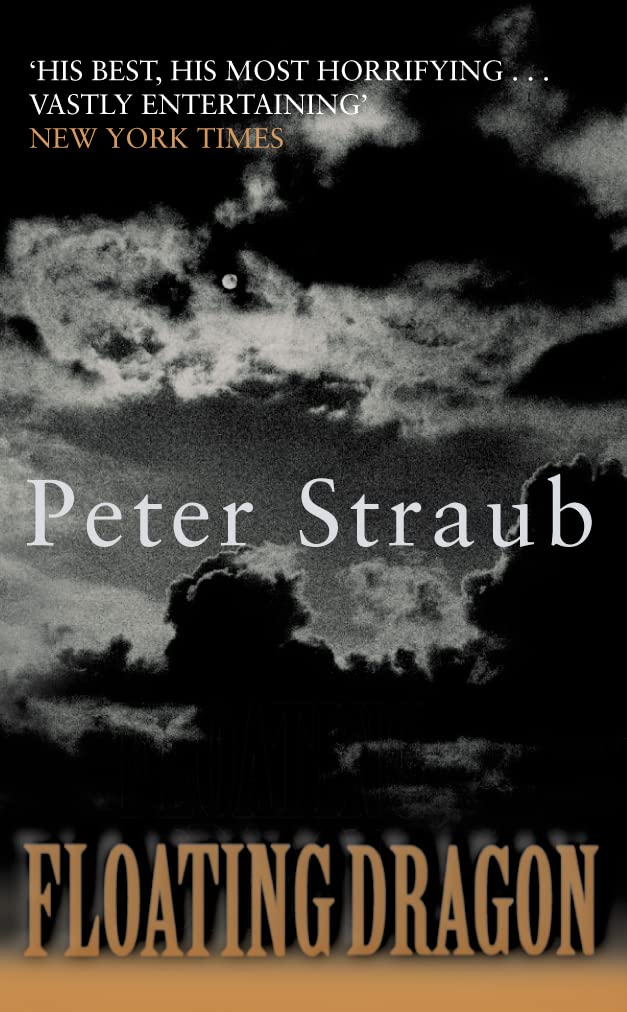
Peter Straub is the most literary major horror writer of his generation, and Floating Dragon is his most ambitious novel. It has, for reasons that escape me, never received the readership it deserves.
Part of this is probably Straub’s general position in the horror landscape — he’s associated with King through their collaboration on The Talisman and Black House, and tends to be treated as the quieter, more cerebral half of that partnership. But Floating Dragon, published in 1983, is as big and as devastating as anything King produced in the same decade.
What’s It About?
Hampstead, Connecticut, is a wealthy commuter town with old money, old families, and an old evil cycling through its history every few decades. The Dragon returns. It takes different forms — a chemical leak from a nearby weapons facility provides cover for the town’s latest bout of horror — and four people who have the ability to perceive it, and perhaps to fight it, find themselves drawn together.
The four protagonists:
Graham Williams — an elderly mystery novelist and Hampstead’s unofficial historian. He has seen the Dragon before, seventy years ago, and survived. He knows what’s coming.
Tabby Smithfield — a teenager who has just moved to Hampstead with his alcoholic father, fleeing a broken marriage. He’s the youngest of the four and the most gifted.
Richard Allbee — a television writer returning to Hampstead to restore a house he’s inherited, whose wife is killed early in the novel. His grief is one of the book’s central emotional threads.
Patsy McCloud — a woman trapped in an abusive marriage, psychically sensitive in ways she hasn’t yet understood.
What Makes It Special
Straub writes differently to King. Where King creates dread through accumulation and intimacy — you’re always inside a character’s head, always feeling their specific fear — Straub operates at a more architectural level. Floating Dragon zooms out to show the whole town, the full historical pattern, the shape of the evil across centuries. It’s more like watching a catastrophe develop from above than being caught inside it.
This is not a criticism. It creates a different, colder kind of dread — the feeling of inevitability that comes from understanding the mechanism.
The prose is beautiful. Straub is a better sentence-level writer than almost anyone working in horror fiction, and Floating Dragon is him at full reach. Scenes of genuine violence and horror are rendered with a precision that makes them more disturbing, not less.
The town itself is a remarkable creation. Hampstead’s social layers — old money, new arrivals, teenagers, elderly residents — are drawn with the care of a literary novelist, and the horror makes sense of the social fabric rather than being imposed on it from outside.
The Scope
Floating Dragon is long and it covers decades of history. This is not a quick horror read. It rewards patience and the kind of attentive reading that picks up the patterns Straub is laying down over several hundred pages. Readers who prefer King’s more propulsive, character-intimate approach may find Straub’s distance frustrating.
Those who settle into its register will find one of the richest horror novels published in the 1980s — arguably the decade that produced more great horror fiction than any other.
Should You Read It?
If you’ve read King’s major novels and want to explore what else exists in serious horror fiction — yes. If you’re looking for something that treats the genre as seriously as literary fiction treats any of its concerns — absolutely yes.
Floating Dragon deserves to be talked about in the same breath as IT and The Haunting of Hill House. It isn’t, quite, but it should be.
Rating: 4.5/5
Rated 4.1 Stars on Amazon. Buy Floating Dragon here.
You Might Also Like
- IT by Stephen King Review
- Black House Review
- Heart-Shaped Box by Joe Hill Review
- Last Days by Adam Nevill Review
Check out Sunset In the East — a mind-bending short story collection from Ben Luxon.